Showing posts with label jewelry. Show all posts

Friday, 14 July 2017

A Gem of a Find - Aquamarine Treasure

I have too many 'jewellery items'; tools, materials, beads and metal, small pots that will come in handy one day to put even smaller things in, and pieces of paper and plastic that have intriguing textures and patterns on that are inpsiring and interesting and, again, will come in handy one day.
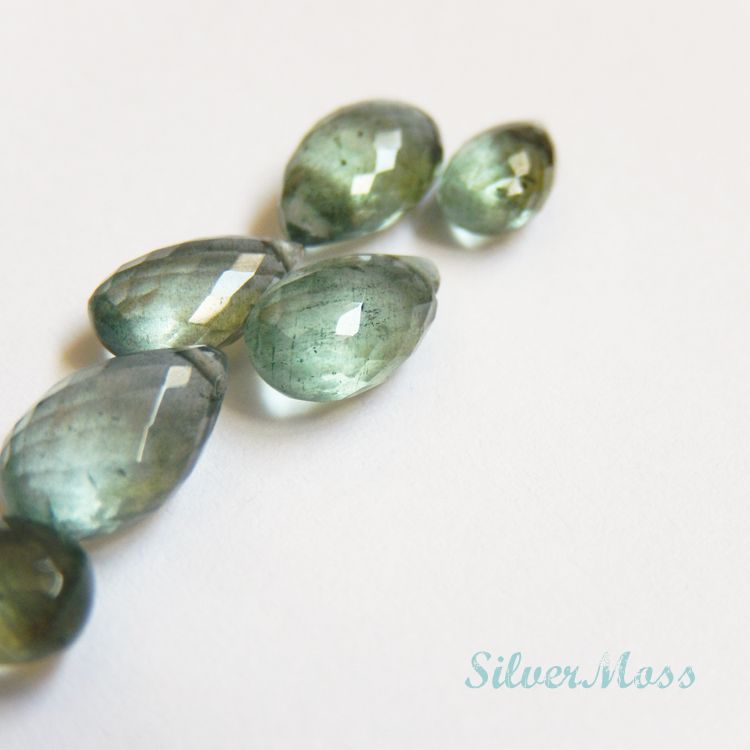

Aquamarine gemstones closeup on SilverMoss Blog

Consequently I have a drawer or two (or more, well, okay, definitely more) or slightly random 'items' stored in an extremely ad hoc manner. This makes it hard to find a particular 'item' when I want it, something I know I have but have only a vague idea of where it is. But it also means that when I go searching sometimes I find some real gems. Literally.
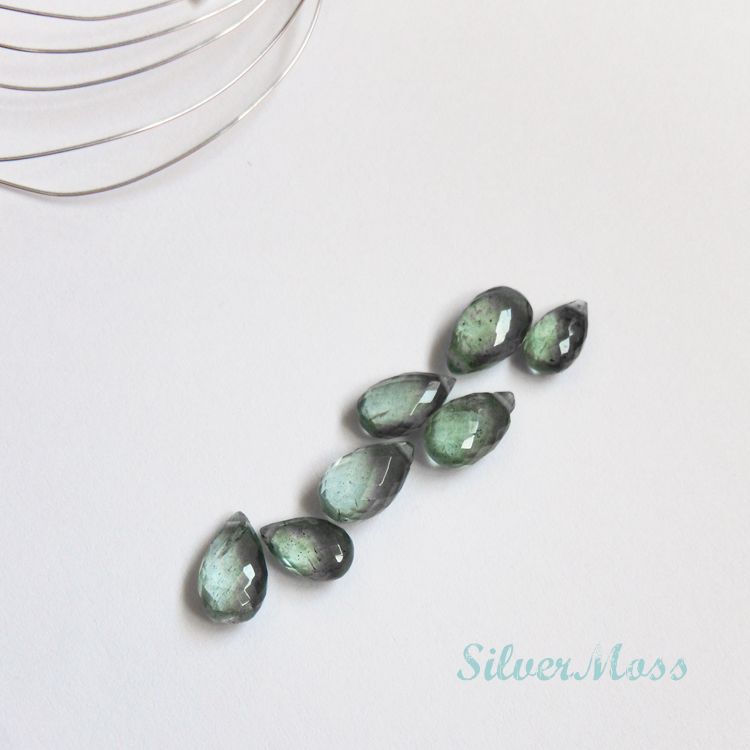

Aquamarine gemstones and sterling silver wire on SilverMoss Blog

I went searching for a couple of underused tools and not only found them (yay) but also found, stored away with them, a small quantity of delicate silver wire (either 0.3 or 0.4 mm - I will need to measure it to be sure) and a tiny bag of beautifully cut aquamarine gemstones.
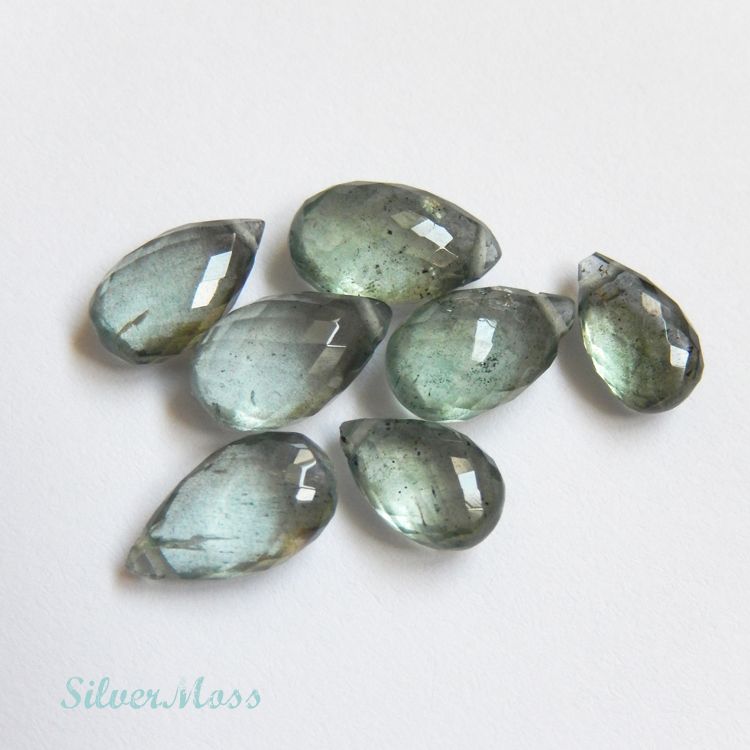

Aquamarine Faceted Gemstones on SilverMoss Blog

I'd forgotten just how inspiring gems can sometimes be, especially when they're cut to bounce and reflect light in the most delightful way. Spending some time just looking at these got me thinking of things to make from them and aware that as soon as I did so the simple magnificance of them would be lost a little - not only would they be 'finished' (for now anyway - repurposing gems in jewellery making has been going on since prehistory) but any setting, even plain silver wire, would detract from their beauty...

Does this mean they won't get utilised? I doubt it. But I also know I'll take my time doing so and spend a little more of it at present just looking at them...

Friday, 23 June 2017

Countryside Inspiration for Jewellery Designs - June 2017

Spring has begun its gentle slide into summer and whenever I'm out and about I've tried to snap photos as much as I can. All the photos in this post were taken on my camera phone as I've been trusting it far more lately to capture a good image for me. I've also been increasingly aware that the shapes and features that attract my eye in the landscape also feed into my approach to the jewellery I design and create.

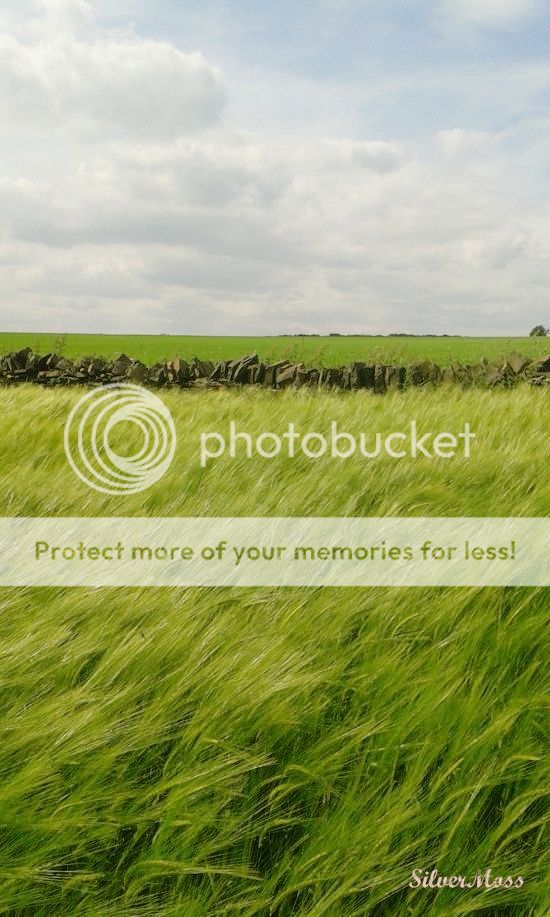
Countryside Jewellery Inspiration Wheatfield by Silvermoss

The photo above of a green wheat field, backed with a wall, then a further field, and then the sky beyond made me consider the importance of both pattern and uniformity in jewellery design as well as aspects that break one or both of those qualities. Yes, the lines of the features in the photo run parallel to each other, but the spaces between those lines are all different - wide, narrow, narrow, wide and so they add interest and break expectations of a uniform pattern.

Creating differences through contrast in design is often pleasing - we naturally recognise rhythm and anything that alters or interupts it. The texture of the wheat itself, being pushed by the breeze, within the overall stripe it forms, shows how effective angles can be when set against horizonal patterns and shapes. And the clouds in the skyscape provide a rounded texture in contrast with all the lines in the photo, serving as a reminder how texture can be used as a subtle contrast.

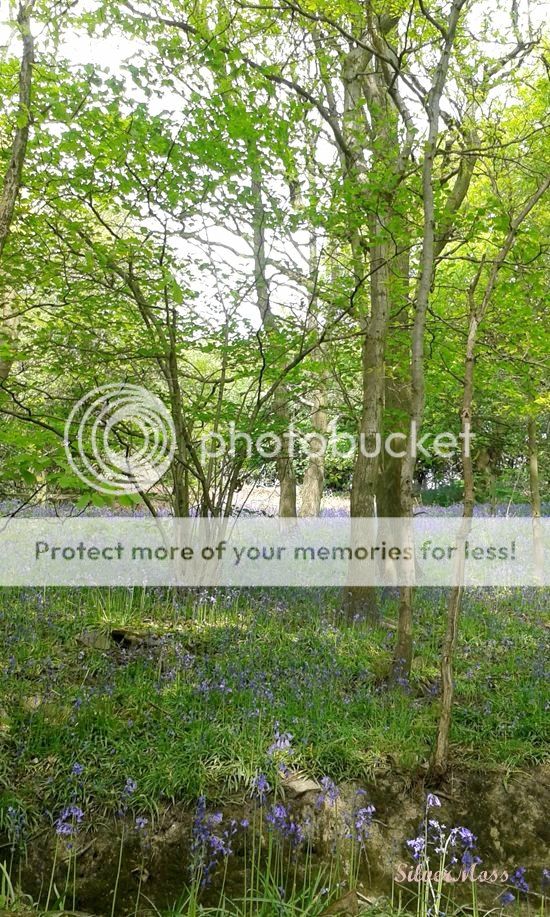
Countryside Inspiration Bluebell Wood by SilverMoss

This photo was taken late into bluebell time, when I nearly missed the best of the blooms through a rather weighty migraine that kept me hidden away instead of experiencing the flowers at their most blue. But even here in this image, the carpet effect is still in evidence and the trees, as ever, provide a protective canopy against the harshness of direct sunshine and beautiful spots of light falling on the flowers.

If you imagine the scene without the blue hues then it becomes a little drab, something a little plain - the bluebells add interest and texture and show how detail can lift a design which, while still attractive, may also be a little flat without it.

Countryside Inspiration Gateway to the Wood by SilverMoss

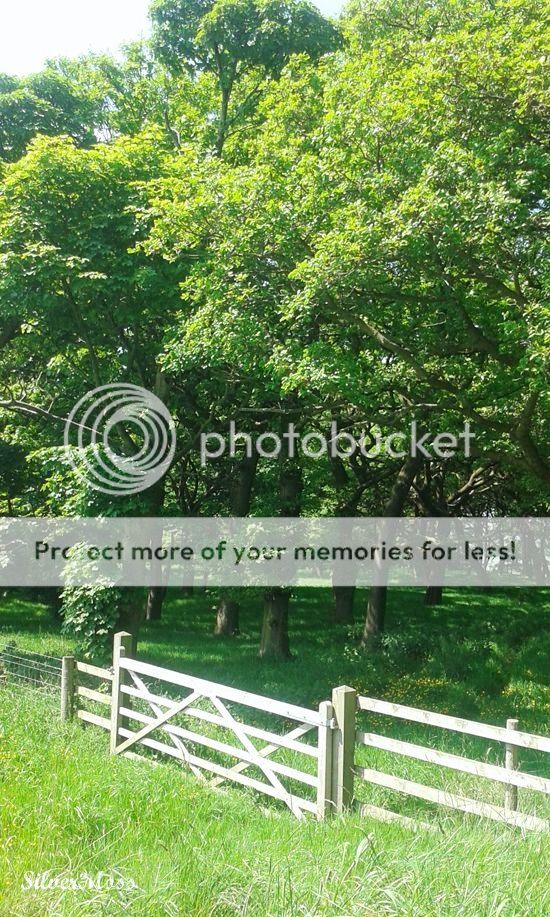
The contrast between the sunlight falling on the wooden gate and fence and the gentler dappled shade in the woodland prompted me to take this photograph. Contrast adds interest in jewellery design, as do angles, like the one that the gate and fence are on which helps draw the eye through the image, and prevent a one-dimensional quality by adding depth. In jewellery, the fact it is three-dimensional and tactile is one of its great strengths and allows freedom in design to create that sense of movement within each piece.

I'm really enjoying examining the photos I take a little more closely, choosing a few of my favourites and thinking about why I took them and like them so much and how certain elements of design manifests in my jewellery designs as well.

Do share anything you've noted in these images, or in any others you yourself may have taken, and leave a comment below. And if you fancy seeing my earlier posts on photographic inspiration they are here (on the seaside) and here (on flowers).

Friday, 26 May 2017

Phone Camera Photography Hints - and a Clever Little Gadget

Taking photos on a phone camera has moved from a last-option to becoming a first choice for some people. And having a camera to hand all the time, as part of the phone you take everywhere with you anyway, means we often tend to take more photos than before. The camera on my phone isn't a top quality one but it can still take a good snap if the conditions are right - and it has a few simple settings that allow me the opportunity to get a decent image if those conditions are a bit wrong.

I've not taken many jewellery photographs with my phone camera as it's not that well-suited to such shots - yes, it has a surprisingly decent close-up if the lighting conditions are good enough, and it also has enough pixels to provide reasonable detail. However it lacks some colour range and subtlety and the closeness of the close-up is limited, so I can't get those extra-detailed images on smaller pieces of jewellery, like rings and earrings.

A silver ring on a plain background taken by camera phone

The photo of the ring above was taken for this blog post on my phone camera - I've edited it very slightly for colour and clarity. I also increased the brightness a little, but perhaps not enough as it still looks a little gloomy...

I still find myself using my phone camera more and more for general photography, when I'm out and about and prefer the convenience of something quick and simple. At times like that a phone camera comes into its own and means I've more photos than ever sitting on another memory card. And that's where they tend to stay...

Orange sunset over the sea taken by camera phone

This photo was taken a few months back when I was fortunate enough to be by the sea on a clear evening as the sun was setting. The quality isn't fantastic but having my phone with me meant I was able to snap this, enjoy the fun of clicking away as the sun sank lower and lower, and have the photographic reminder of the experience afterwards. I found this image hidden in the depths of the memory on my phone...

A few years back digital photo frames were nearly everywhere. I never owned one myself but have sat in other peoples' house, watching the photos images flick past, some good and well-composed, intermingled with many that should have been deleted immediately (and how many of us get around to that as often as we should) and lots that were out of focus or too dark or too light or just plain embarrassing...

So I was intrigued by a new digital photo frame, this one a smart one. The Aura Frame displays photos directly from a mobile phone, so it has no storage limits other than those of the phone itself. It manages to not only pick the best quality images for display but also groups pictures of the same people together. The frame itself has no controls on it; everything is dealt with via an app - although it also allows you to wave an image away by hand if you don't like it, which sounds quite fun.

And the Aura Frame company created this guide to taking a good photo on your phone camera - It was interesting as I believe it's hard to have enough advice and hints for such a topic as taking good photos.


Infographic on how to take great photos on your phone camera

Five Hints to taking a Good Camera Phone Photo


A few pointers of my own that I've learned through taking my own images are -

* Don't assume auto is best - most camera phones will have several modes for taking photos and while auto is good, others can sometimes be better. I've had good results with using the 'night' mode (for taking photos of low light scenes without a flash) but in the daylight when things are just a little bit gloomy and in need of more brightness. 'sports' mode is also handy for any kind of action shot.

* Touch the image on your phone where you want the focus to be - this is one of the joys of phone cameras and touch screens, being able to quickly and easily move the point of focus in the image you're composing.

* Keep your lens clean - it's easy to overlook this but tiny specs of dust and dirt can easily build up on your camera lens and will make your photo look smudged and blurry. A quick clean before taking a photo can sometimes make a world of difference to your final image.

* Alter the angle you hold your phone to alter the light - if your viewfinder shows your photograph will be pretty dark then tilt the phone up or down very slightly. You can often get very nearly the exact same view but by allowing more light in, via an altered angle, you can add detail that is otherwise lost in gloom. This works in reverse too for images that look to be too bright.

* Explore the settings - we all tend to just point and click but if you take some time to explore the modes your camera has to offer, perhaps by taking pictures of the same view but with different  settings, then you can quickly find how some alterations can create an improvement (or not!) to the quality of your images.


Hope some of these hints are useful and help your own phone camera photography - do leave any tips of your own in the comments, I'd love to read them.

~~~~

And if you'd like to see more of my posts on photography, including my photographing jewellery blog series, then do check this link out and explore.

~~~~

Please note - The infographic featured in this post was supplied by Aura Frames themselves, but I am otherwise not connected with the company and the links in my post are
 not affiliate links. As always, my views are my own and have been given honestly.

Monday, 26 January 2015

Jewellery, History, and all that Silver


lois jewellery infographic - silver moss designs

As a bit of a history buff, I've always found the connection between jewellery and the past to be fascinating.

Many of the techniques jewellers use today are the same methods that someone would have used hundreds of years ago to gain the same result.

It intrigues me when I'm using a hammer to add texture to silver, or a saw to pierce out a design, that the tools work on the same principles now as they did in the past. 

And I'm very aware of how much easier it is now to use those tools when I'm soldering with a flame that comes from a simple gas-fed torch, rather than having to control the heat output by using a mouth blowpipe, as shown in some of the images in this article.

Creating jewellery provides a living connection to the past, and it always increases my respect for the makers of ancient pieces of jewellery, dug out of fields (and here) or from underneath car parks.

Browsing through images of jewellery, from all eras of history, provides ideas for things I can (attempt to) create myself. It also means I can easily justify watching costume dramas on film and TV, like Wolf Hall, on the basis they're useful for inspiration and not just self-indulgent escapism for a history-junkie...

So this infographic, create by Lois Jewellery, caught my eye and imagination. It handily summarises the main eras of Western history and the jewellery that was created in them. Hope you enjoy reading it!

Throughout human history, jewellery has existed as a form of expression, wealth and social status. Take a look at this visual and take a trip through the history of Jewellery, starting with the evolution of jewellery in the ancient world, all the way through to modern day jewellery tof today.

Credit to Lois Jewellery for creating this visual.


Monday, 22 October 2012

Copper in Autumn

Last weekend I spent a few hours with a friend in her workshop, tucked away against the chill weather outside, surrounded by silver, copper, polishers, rolling machines, and enough tools to make anyone who makes metal jewellery rather happy.


Copper ring, with a rolled pattern. Like a leopard's spots, or a honeycomb.

We chatted about the price of silver (slightly decreased), the fact I've most definitely missed the final posting date for the Diamond Jubilee hallmark (boo), and that assay offices will now hallmark silver and gold even if they're attached to metals such as copper, something they didn't previously do (interesting).


Another ring through the rolling mill. This time the pattern is more abstract.


We drank a lot of tea, finished off a jar of hot chocolate, and ate too many biscuits and chocolates (very naughty in a workshop, I know).

Oh, and we also made some jewellery.


More roller textured copper, a little crown-like...

Crown-like also, but in a slightly more-committed curvy-way.

Unfortunately, I don't have any photos of the beautiful silver locket my friend finished, nor of the silver and copper owl she was working on, but I have included a few snaps of the four copper rings I made, and of the copper owl I did some work on (and no, we didn't converse beforehand, just coincidentally were both working on owls...), and which may well turn into a brooch. Or a pendant. Hmm...


The two crowns fit together, just, and make a wider ring.

Nothing I started is finished yet, the rings needing some more filing and polishing, and  the owl either needing more work on the detail, or me discarding it as a prototype or experiment.


A brooch in waiting. Or a pendant. Or just a copper owl.

But, still, not a bad way to spend a Saturday in autumn at all.

Friday, 17 June 2011

Forays into clay, part one

I was given some polymer clay last year and have finally found some time to experiment a little with it. Okay, I was a bit nervous too. But I was surprised at how easy it is to get some rather impressive effects, even if I do say so myself. . .


More beads, and photos, to follow. I'm certainly not putting silver jewellery making aside (I have too many tools for a start!), but I'm enjoying exploring other fields a little. I plan to experiment some more with polymer clay and I also have some copper wire - I'm going to discover just how similar/dissimilar it is to silver.

Sunday, 23 May 2010

It's (been) oh so quiet . . .

. . . on my blog of late. I'd fallen into a combination of busy, busy, busy in the non-blog world and a curious blogger's-block which meant that every time I sat down to compose a post I either couldn't think of a word to type or couldn't find a photo I wanted to share.

So I stayed quiet, until now. The dust in the non-blog environment is starting to settle a little, and that has helped free my mind also.

Like the spring after the winter, I feel I'm coming back to life.

So, what have I been doing? Well, I've moved house; nearly found everything I misplaced while moving house (including smithing tools!); finished a long and arduous Open University course; nearly finished a very long-standing silversmithing project; and I've got over the long, cold winter as it has melted into a late spring which is as warm as summer . . . until it turned cold again *sigh*

Something else I've been doing, after discovering where my silver had disappeared to, is a bit of jewellery making. Here are a few rings I've finished making, which gave a nice sense of satisfaction after such a time away from things, and also provides something for me to show you . . .